
Drones have changed everything from filmmaking to farming, yet one barrier still throttles their true potential: they can’t lift much. Most commercial and military multirotor drones barely manage a 1:1 payload-to-weight ratio, meaning a 30-pound drone might lift only 30 pounds—if you’re lucky.
Now DARPA wants to blow that ceiling wide open.
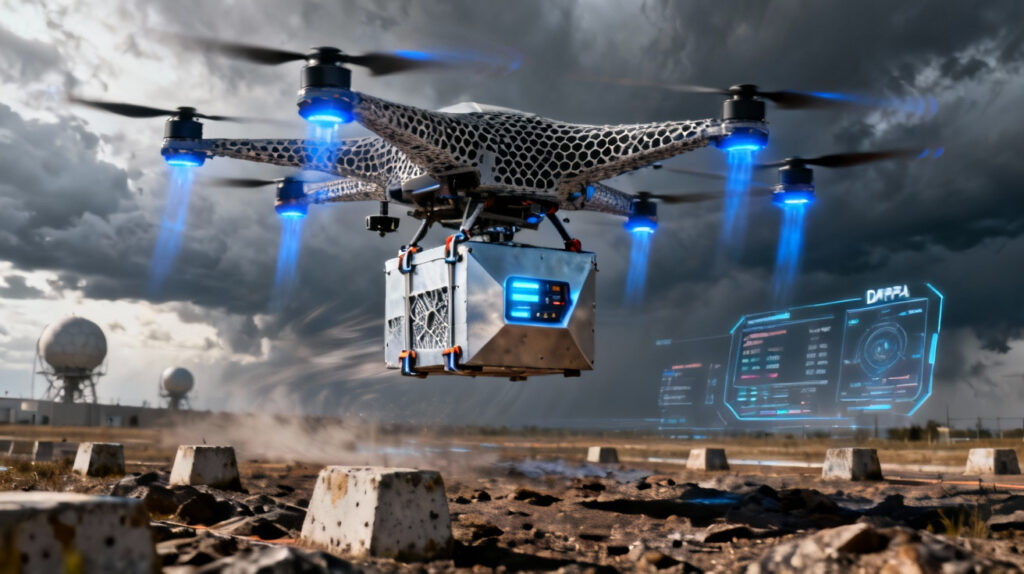
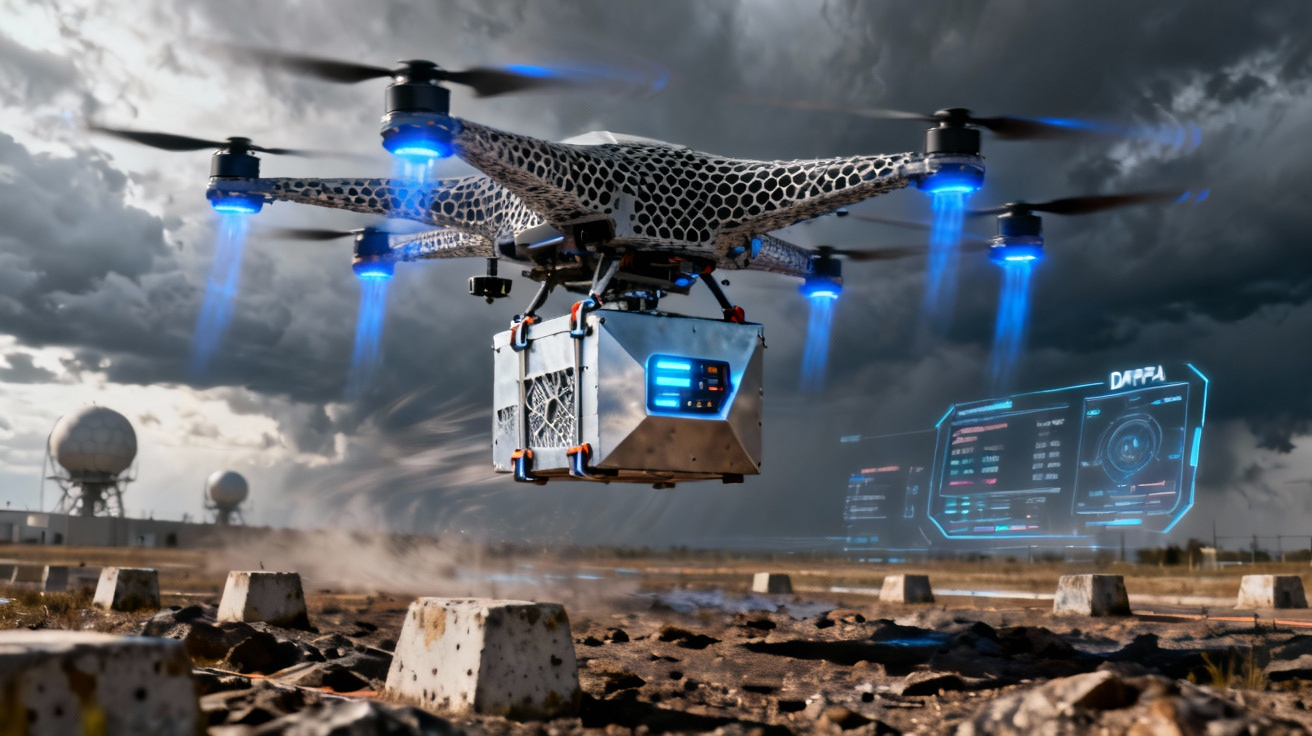
The agency just announced the DARPA Lift Challenge, a national competition pushing innovators to build drones that can carry four times their own weight. Yes—a lightweight aircraft lifting more than 4× its mass, flying a 5-nautical-mile course, and staying FAA-compliant the entire time. To spark the revolution, DARPA is putting down $6.5 million in prizes.
This isn’t just another defense research project; it’s a reboot of vertical lift aviation.
Why This Challenge Matters
For years, engineers have accepted that multirotor drones are simple and versatile, but limited in heavy-lift missions. That changes now.
DARPA believes a 4:1 payload ratio is achievable thanks to advances in:
- Aerodynamic design
- High-strength, low-weight materials
- Next-generation propulsion systems
If teams crack this, we unlock drones that can replace forklifts, resupply troops in hard-to-reach zones, deliver disaster relief faster, and boost commercial logistics. Suddenly, UAVs stop being tools—and start becoming workhorses.
A Competition Built for Inventors, Scientists, and Garage Tinkerers
One of the coolest aspects of the Lift Challenge is that it encourages anyone—from aerospace labs to weekend engineers—to compete. DARPA even describes it as tapping into the “garage inventor spirit.”
The rules are simple but intense:
- Drone weight: 55 pounds max (with fuel/power onboard)
- Payload requirement: Lift ≥110 pounds
- Course: Complete a 5-nautical-mile circuit
- Timeline: Live trials in Summer 2026
- Safety: Full FAA compliance required
The format forces creativity. Traditional quadcopters won’t cut it; competitors will need hybrid lift methods, exotic rotors, new propulsion layouts, advanced composites—or something nobody’s seen before.
Why a 4:1 Ratio Is a Big Deal
If you’re science-minded, here’s the remarkable part: multirotor drones normally struggle with lift efficiency because every rotor has to fight its own turbulent wake. When you add more rotors to lift more mass, you eventually hit diminishing returns.
But new research suggests we can dodge those limits by:
- Redesigning rotor geometries
- Reducing wake interference
- Using ultra-light composite structures
- Improving motor torque density
- Leveraging hybrid or high-thrust propulsion
For non-scientists, imagine carrying four of yourself on your back—and still running a 5-mile course without collapsing. That’s what DARPA wants these drones to pull off.
Military Impact
Heavier-lift drones would immediately change how militaries operate. They could:
- Deliver supplies without exposing soldiers
- Evacuate wounded personnel
- Transport equipment in dangerous terrain
- Support urban missions without helicopters
In short, they expand the speed and safety of modern operations.
Civilian Impact
Civil applications might be even bigger:
- Disaster response after hurricanes and wildfires
- Moving construction materials
- Large-parcel or medical supply delivery
- Power-line and bridge maintenance
- Precision agriculture with heavier sensors
A future where a 50-lb drone can lift a 200-lb load opens the door to a new logistics economy.
DARPA Wants Feedback—Now
DARPA is accepting public input on the draft rules through November 26, 2025.
Registration opens January 2026 and closes May 2026.
Details and sign-ups: https://www.darpa.mil/lift
If you’ve ever dreamed of building something that changes aviation—this is your moment.
Check out the cool NewsWade YouTube video about this article!
Article derived from: DARPA Lift Challenge: Unlocking the future of flight through American ingenuity | DARPA. (n.d.). https://www.darpa.mil/news/2025/lift-challenge