
A New Vision Breakthrough
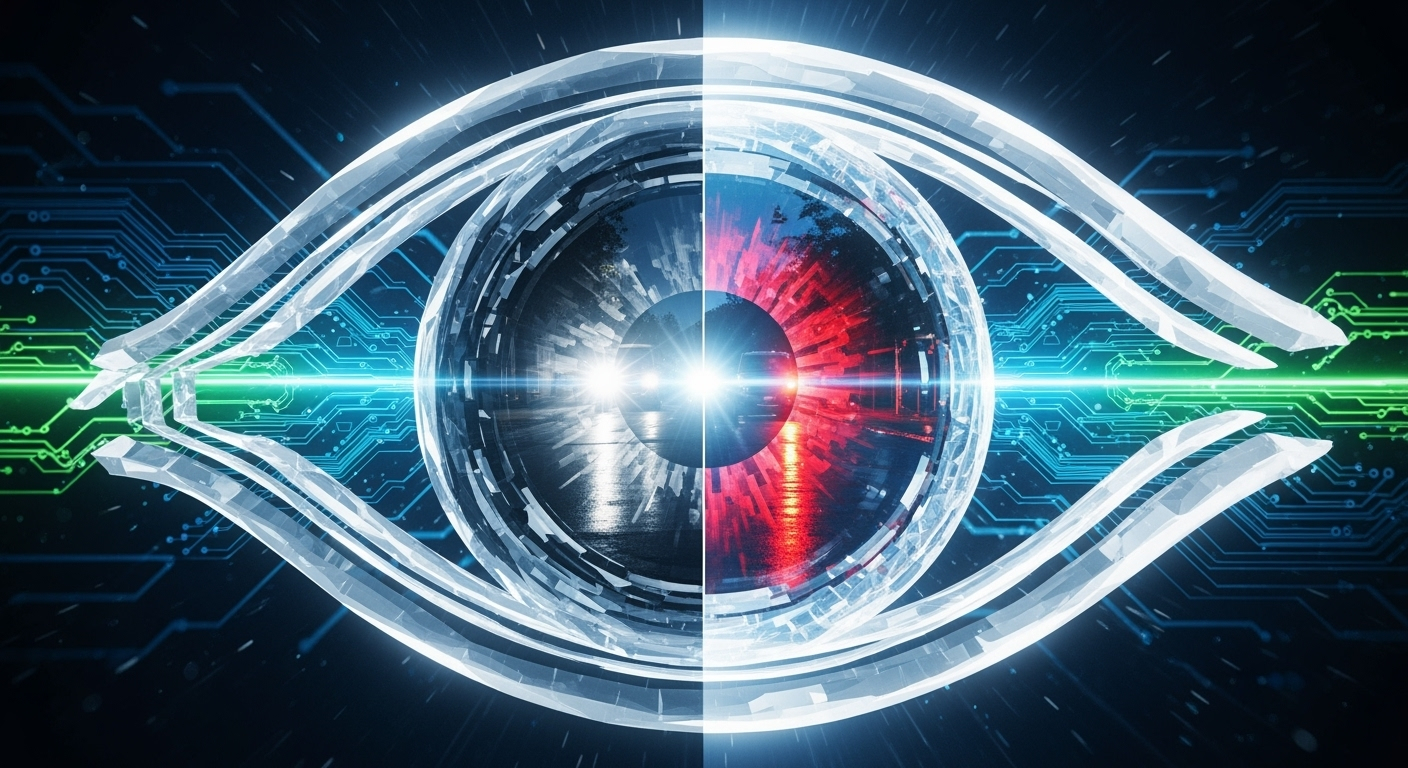
Imagine a camera that doesn’t just record images but processes them instantly. It could help people see better in the dark, cut through glare, and even assist with color blindness. Now, researchers have made this possible with a new CuInP₂S₆-based ionic-electronic photodetector.
Published in Nature Communications (2025), this breakthrough combines ionic and electronic conduction to create a sensor that both mimics and improves on human vision.
Why Human Vision Needs Help
The human eye is extraordinary. However, it has clear limits:
- Color Blindness: About 8% of men cannot properly see red and green.
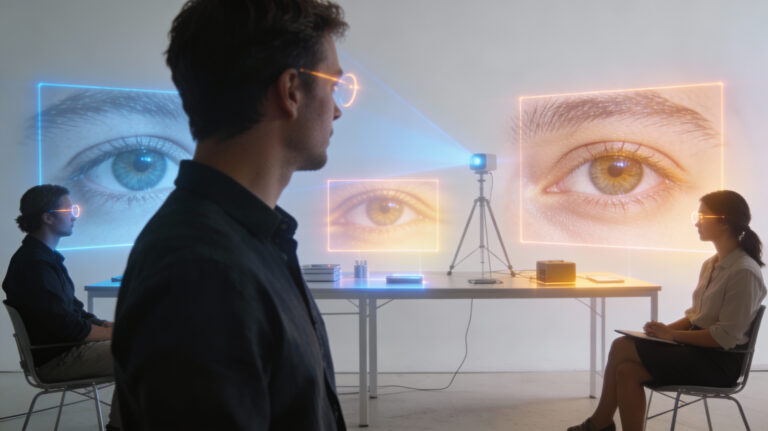
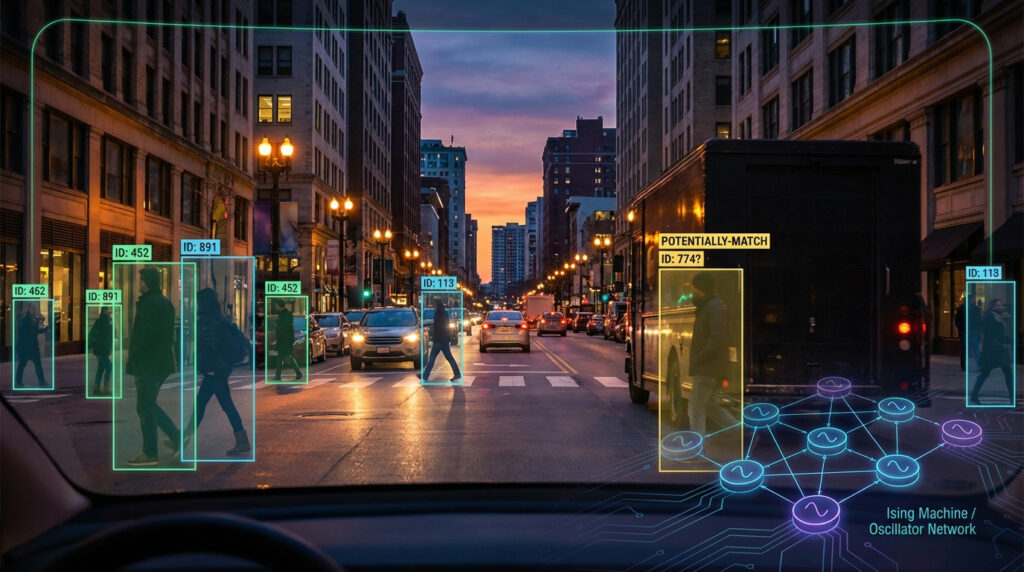
- Glare and Darkness: Our eyes cannot handle bright headlights and dim surroundings at the same time, which makes night driving difficult.
- Processing Limits: Cameras and eyes alike often rely on heavy computing to clean up images, which increases power use and slows response time.
Because of these issues, scientists are working on devices that go beyond the natural limits of vision.
How the Ionic-Electronic Photodetector Works
The secret is in CuInP₂S₆ (CIPS), a two-dimensional material with unusual properties. It combines ionic and electronic conduction, which means it can respond to light in flexible ways:
- It can switch between positive and negative photoresponse, allowing instant image adjustments.
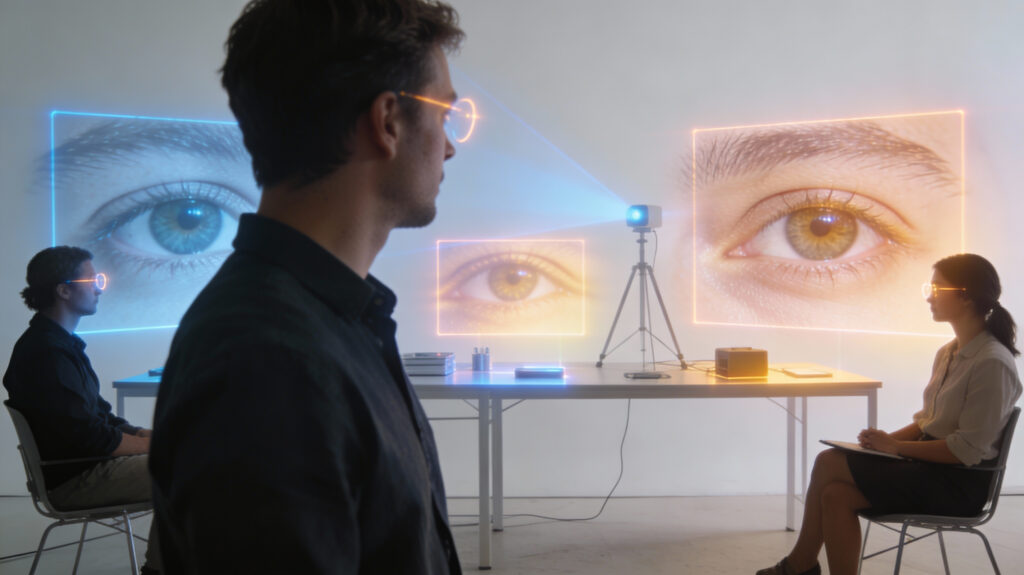
- It can also react differently to red and green light, boosting color contrast for people with red-green color blindness.
As a result, the device can process images directly inside the sensor instead of sending raw data to a separate processor. This makes it both faster and more energy-efficient.
Key Performance Highlights
Moreover, the CIPS photodetector offers impressive results:
- 880% boost in signal-to-background ratio (SBR) — faint objects become visible even in glare.
- 1,170-fold noise reduction — images appear far cleaner without extra computation.
- 43% improvement in red-green contrast — potentially life-changing for people with color blindness.
- Fast, low-power operation — suitable for wearables, self-driving cars, and AI vision systems.
Real-World Applications
This innovation opens doors to multiple uses:
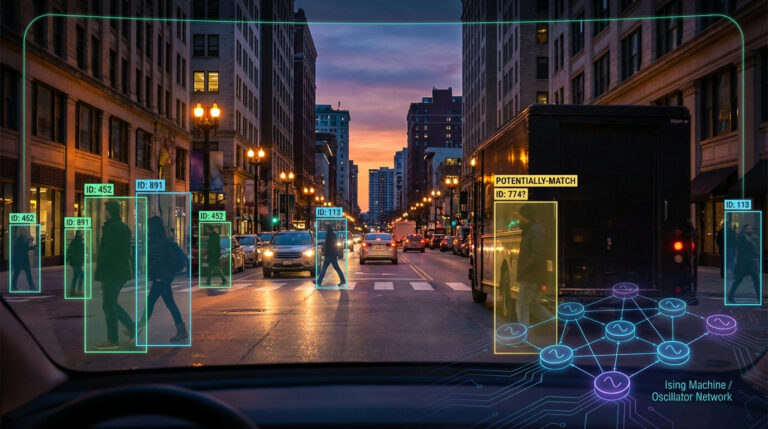
- Driver Assistance: Detect pedestrians or road hazards in low light or against oncoming headlights.
- Color Blindness Aid: Enhance red-green contrast in real time, helping people read signs or maps.
- Robotics and AR/VR: Create cameras that think and react like human eyes but process images instantly.
- Neuromorphic AI Systems: Merge sensing and computing for energy-efficient machine vision.
Why This Matters
By combining image sensing and processing in one device, this technology changes how cameras work. It not only captures scenes but also improves them on the spot. Consequently, it could support assistive tools for the visually impaired, enhance car safety systems, and power smarter robots.
What’s Next?
To bring this breakthrough into daily life, researchers will need to scale up production and ensure uniform performance across large arrays of these detectors. If successful, we could see wearable vision enhancers and built-in automotive safety features within the next decade.
Check out the cool NewsWade YouTube video about this article!
Article derived from: Zhong, Z., Zhuang, Y., Cheng, X. et al. Ionic-electronic photodetector for vision assistance with in-sensor image processing. Nat Commun 16, 7096 (2025). https://doi.org/10.1038/s41467-025-62563-7