
If you’ve ever had a dental impression taken, you probably remember the messy trays filled with putty-like material that sit in your mouth until they harden. It’s uncomfortable, sometimes triggers a gag reflex, and can feel like it takes forever. Dentists have relied on this method for decades to design crowns, dentures, and partial dentures. But now, thanks to digital technology, there’s a better way: intraoral scanners.
A new clinical study published in Scientific Reports (2025) looked at how accurate these scanners are for people who are missing some teeth in their upper jaw. The results show that digital scanning isn’t just more comfortable—it’s also reliable enough to replace traditional impressions in most cases.
What is an intraoral scanner?
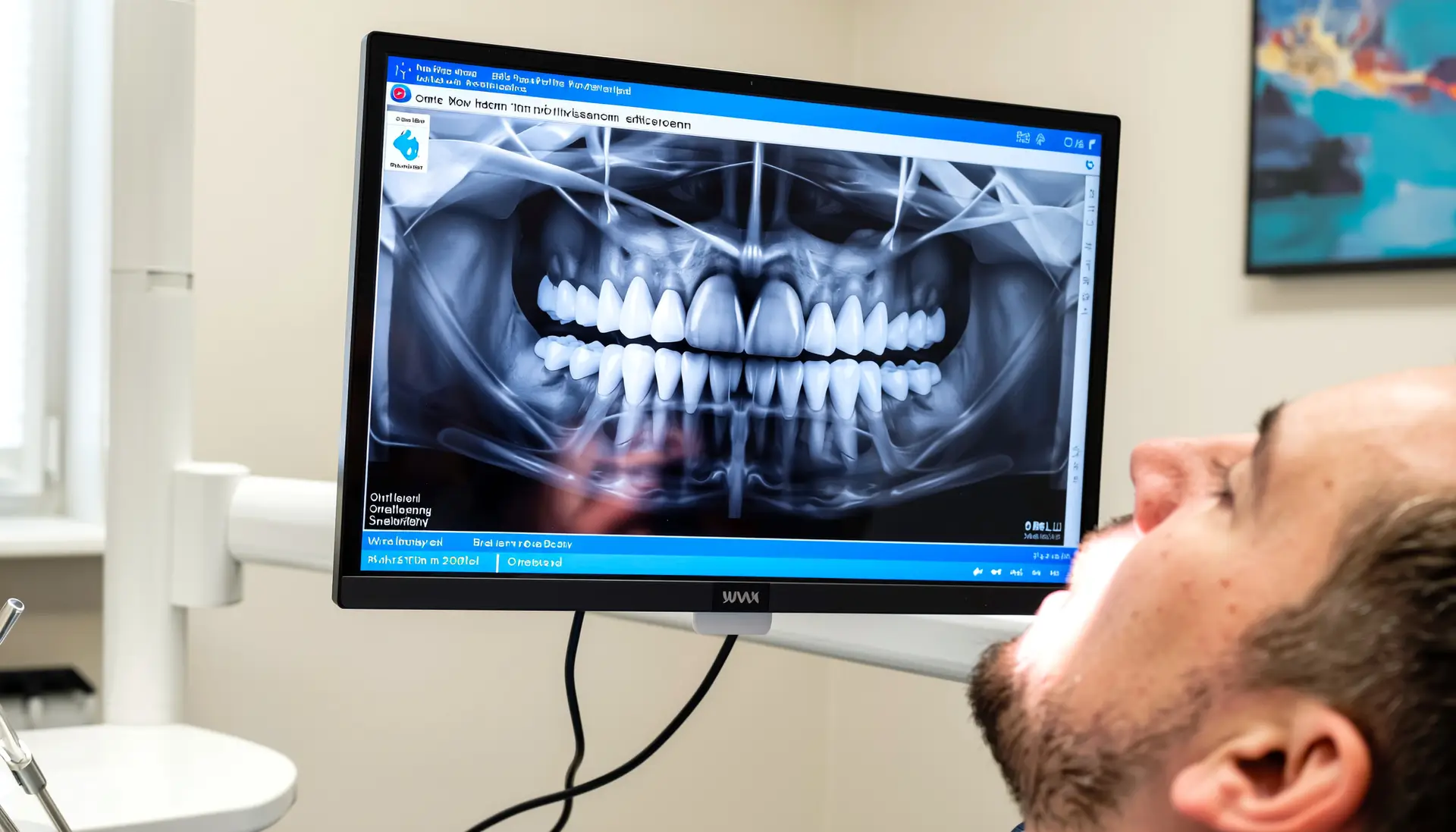
An intraoral scanner is a small, handheld device that looks a bit like an electric toothbrush. Instead of pressing putty into your mouth, the dentist gently moves the scanner over your teeth, gums, and palate. The device takes thousands of images per second and builds a detailed 3D digital model of your mouth on a computer screen.
This model can be shared instantly with dental labs, used to design partial dentures or crowns, and even stored for future reference without physical plaster models.
How does it work?
The scanner uses safe optical technology—basically high-speed cameras and light sensors—to capture the shape and texture of your teeth and surrounding tissues.
- The dentist usually starts scanning from the back teeth, moving across the arch.
- The software stitches the images together into a seamless digital model.
- Areas like the roof of the mouth (the palate) or spaces where teeth are missing are also scanned so that dentures or partials will fit comfortably.
The entire process takes only a few minutes and avoids the messy impression materials used in traditional methods.
What did the study find?
Researchers tested the Trios 3 intraoral scanner on 64 patients who were missing some teeth on their upper jaw. They compared the digital scans to conventional impressions made with silicone rubber.
Here’s what they found:
- Accuracy (trueness):
- Teeth: around 62 microns (about the width of a human hair).
- Gaps where teeth were missing: about 63 microns.
- Palate (roof of the mouth): about 116 microns, slightly less accurate but still within acceptable limits.
- Comfort and speed: Digital scans took about 6 minutes, while traditional impressions took over 12 minutes.
- Consistency: Arch width, type of missing teeth, and classification of tooth loss did not significantly affect accuracy. However, patients with higher palates sometimes had slightly less accurate scans, meaning dentists may need to double-check those cases.
Why is this better?
- Comfort: No gooey trays, no gag reflex, and a shorter chair time.
- Accuracy: For teeth and edentulous ridges, scans were as accurate—or better—than traditional impressions.
- Digital workflow: Labs receive files instantly, improving communication and reducing waiting time.
- Storage: Digital models don’t take up physical space, and they’re easy to retrieve for future treatments.
- Eco-friendly: No disposable impression trays or plaster casts are needed.
What does this mean for patients?
For anyone getting a removable partial denture (RPD) or other dental prosthesis, intraoral scanning means:
- Faster, cleaner appointments
- Less discomfort during impressions
- A precise fit for your new dental work
While dentists may need to pay extra attention when scanning patients with a high palate, overall, this study confirms that intraoral scanners are a practical and patient-friendly alternative to conventional impressions.
Bottom line: Digital impressions aren’t the future of dentistry—they’re the present. If your dentist offers intraoral scanning, you’ll likely enjoy a smoother, faster, and more accurate experience than with traditional impression materials.
Check out the cool NewsWade YouTube video about this article!
Article derived from: Yao, M., Gan, N., Ming, J. et al. In vivo study of intraoral scanner trueness in partial edentulism. Sci Rep 15, 20637 (2025). https://doi.org/10.1038/s41598-025-06562-0