

The United States has officially unleashed its most powerful laser yet. At the University of Michigan, the ZEUS laser facility has reached a record-shattering 2 petawatts — that’s two quadrillion watts of power in a pulse lasting just 25 quintillionths of a second. To put it in perspective, ZEUS briefly generates more power than 100 times the world’s total electricity output, all focused into an ultrashort burst.
What is ZEUS?
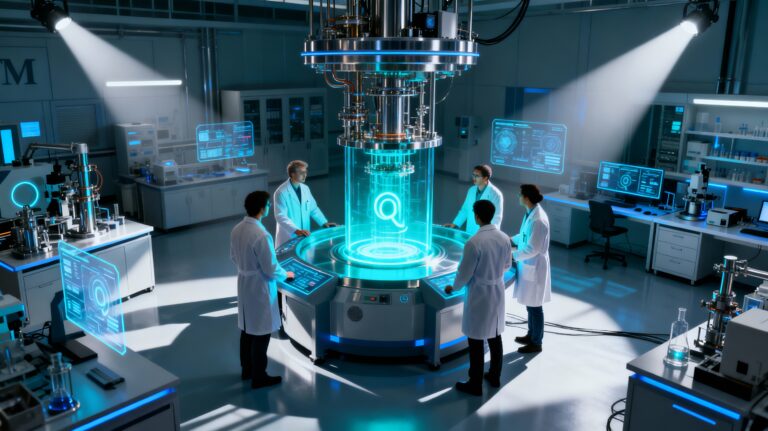
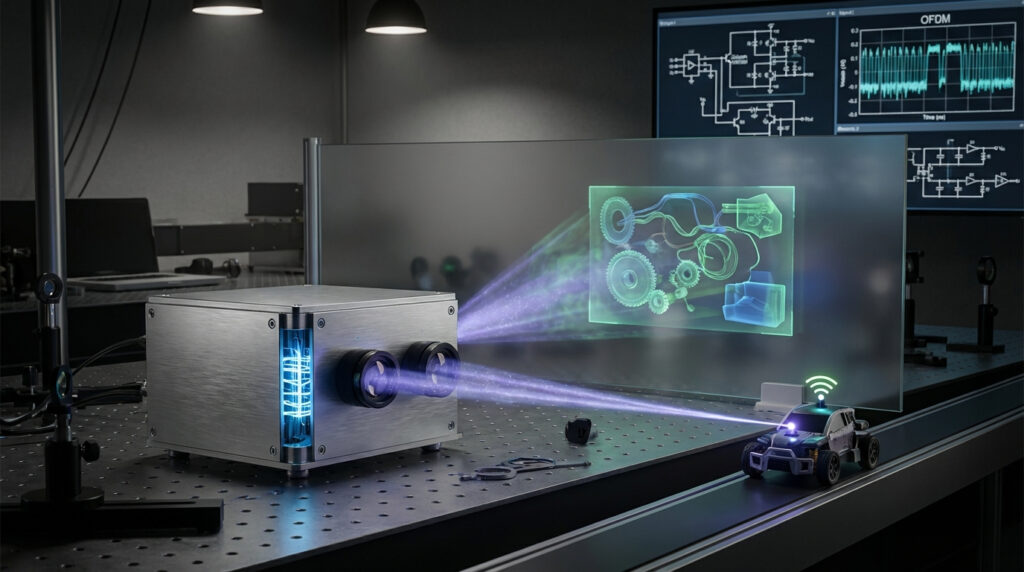
ZEUS stands for Zettawatt Equivalent Ultrashort laser pulse System. Backed by the National Science Foundation, it’s designed as a user facility, meaning scientists across the U.S. and the world can apply to run experiments there. Housed inside a space about the size of a school gym, ZEUS is packed with precision optics, massive titanium-sapphire crystals, and vacuum chambers that shape and amplify each pulse.
Why Is It Important?
ZEUS isn’t just about breaking records—it’s about enabling discoveries. With its power, researchers can:
- Advance medicine: Improve cancer treatments and soft tissue imaging.
- Strengthen national security: Develop new radiation sources for defense applications.
- Revolutionize materials science: Test extreme conditions that mimic space and nuclear environments.
- Explore astrophysics: Recreate cosmic-scale physics in the lab.
How Does It Work?
Think of ZEUS like a cosmic surfboard. When its laser pulse strikes helium gas, it creates plasma — a charged soup of free electrons and ions. Electrons then “wake surf” behind the pulse, accelerating to extreme energies just like surfers ride the wake of a speedboat. With ZEUS, researchers aim to reach electron energies once only possible in massive particle accelerators.
What’s Next?
This milestone experiment at 2 petawatts paves the way for ZEUS’s ultimate goal: 3 petawatts. At that power, when accelerated electrons smash into counter-propagating pulses, they’ll experience what looks like a zettawatt-scale event. That’s one million times stronger than ZEUS’s already staggering output — opening doors to physics that pushes human understanding into new territory.
As NSF program director Vyacheslav Lukin put it, ZEUS will “expand the frontiers of human knowledge in new ways and provide new opportunities for American innovation and economic growth.”
With ZEUS online, the U.S. is officially back at the forefront of high-intensity laser science.
Check out the cool NewsWade YouTube video about this article!
Article derived from: The US has a new most powerful laser. (2025, May 19). University of Michigan News. https://news.umich.edu/the-us-has-a-new-most-powerful-laser/