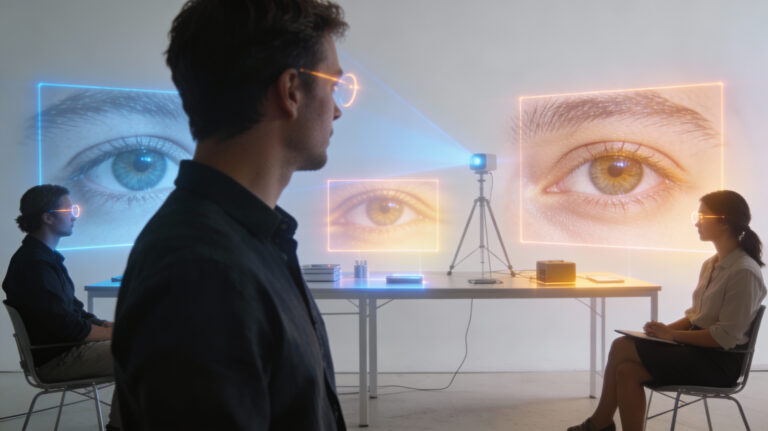

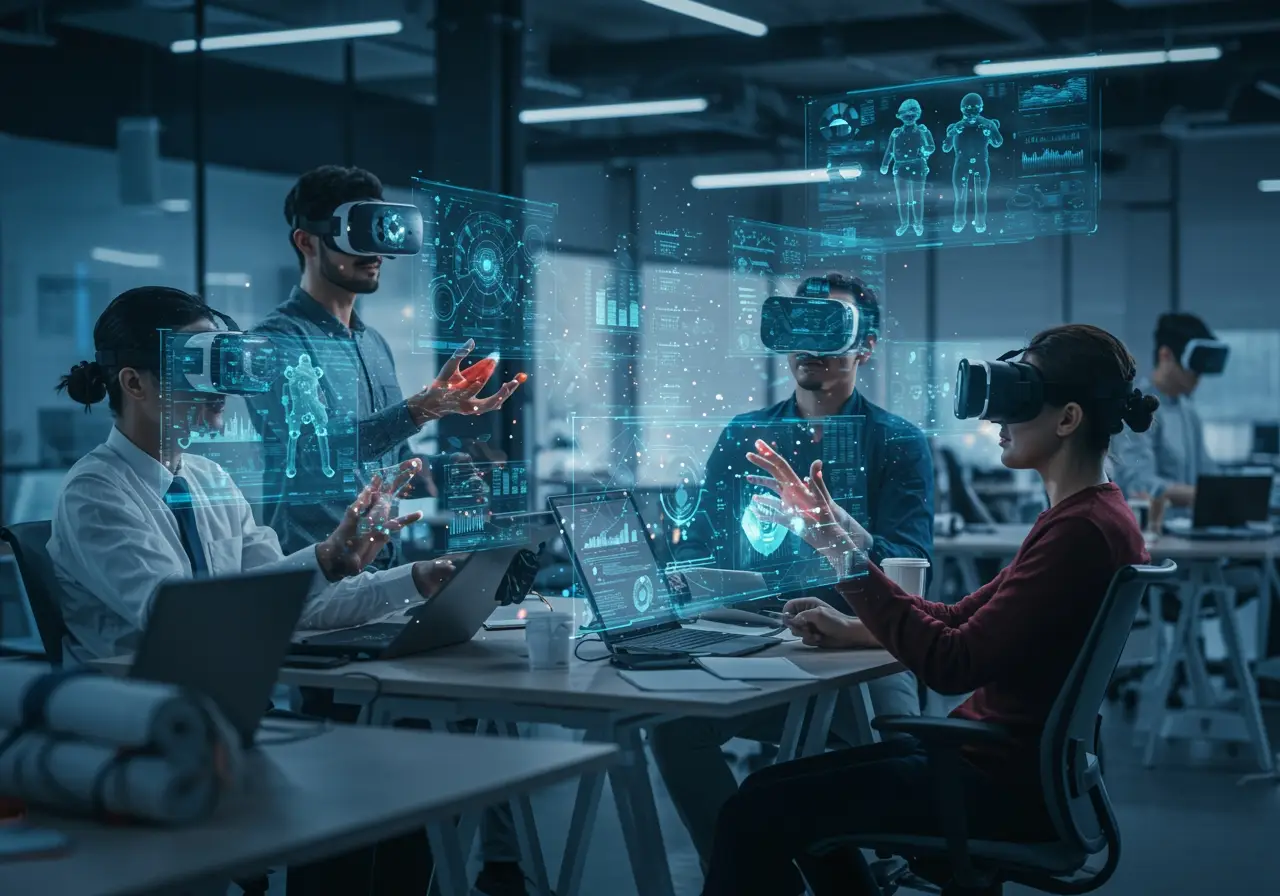
Extended reality (XR) is no longer just a buzzword—it’s becoming the backbone of the modern workplace. From digital twins in engineering to immersive collaboration in hybrid teams, XR technologies are bridging physical gaps and boosting efficiency. At the heart of this transformation are hand and eye tracking technologies, which are redefining how we connect, communicate, and collaborate in virtual environments.
Why Hand and Eye Tracking Matters in XR
Traditional virtual experiences relied on controllers, which often felt clunky and unnatural. Today, sensors that track eye, hand, and body movements allow professionals to interact with digital content as seamlessly as in real life. This shift not only enhances immersion but also improves communication, training, and decision-making in virtual workspaces.
1. Improving Communication
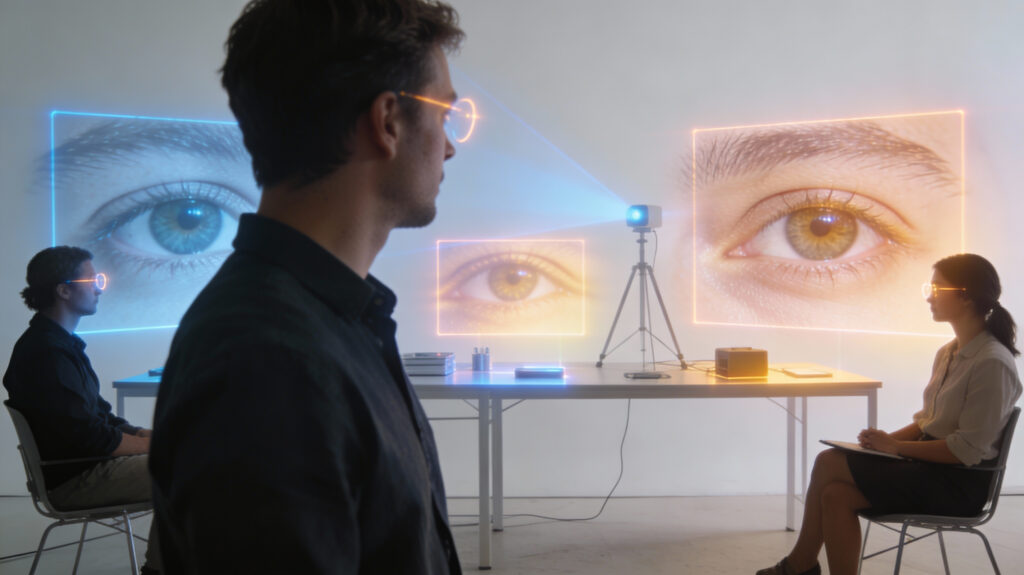
Human communication is largely nonverbal, but most remote collaboration tools miss that dimension. XR hand and eye tracking changes the game. By capturing facial cues, gestures, and gaze direction, avatars now feel more lifelike. This reduces misunderstandings and makes conversations clearer. Tools like Microsoft Teams Immersive Spaces allow users to wave, give thumbs-up reactions, or even highlight details with a glance—no button pressing required.
2. Optimizing Collaboration
Imagine a team of engineers scattered across the globe, all working together on a digital twin of a vehicle. With XR, designers can manipulate 3D blueprints with their hands, rotate parts in real time, and even feel haptic feedback. Companies like Siemens are already experimenting with these tools to speed up prototyping and improve teamwork. When multiple tracked avatars interact with the same object, collaboration feels less like a video call and more like standing side by side in a lab.
3. Strengthening Team Bonds and Inclusivity
Remote work can sometimes make employees feel disconnected. XR brings back the human element by enabling natural interactions—eye contact, posture, and gestures. Accenture’s Nth floor metaverse experiment shows how avatars that reflect real human behavior foster trust and inclusion. A simple wave or nod in XR can build stronger bonds than text chat ever could.
4. Driving Efficiency and Productivity
XR isn’t just about making work “feel” better—it’s about measurable productivity gains. For example, Flint Systems’ WELES welding simulator uses precise hand tracking and eye data to train welders with real-world accuracy. Employees learn faster, mistakes drop, and performance improves. Similarly, immersive spaces let teams instantly switch between presentations, whiteboarding, and data analysis, all without leaving the virtual room.
5. Unlocking Business Insights
Perhaps the most exciting feature of XR tracking is data. Eye movements reveal where users focus their attention, while hand gestures show proficiency or hesitation. This information helps companies optimize training, improve workflows, and even understand customer preferences. By combining XR data with AI, businesses gain actionable insights into performance, engagement, and decision-making.
The Role of AI in XR Tracking
Artificial intelligence is taking XR hand and eye tracking to the next level. AI can predict a user’s next gesture, reducing lag and making avatars move more fluidly. It also analyzes gaze patterns to detect overlooked prompts or training difficulties in real time. By fusing data from multiple sensors, AI builds an accurate, lifelike digital presence that strengthens immersion and learning.
Looking Ahead
Hand and eye tracking in XR isn’t just enhancing presence—it’s powering productivity. As AI and sensor technology advance, these tools will become even more precise, inclusive, and transformative. Soon, working in XR may feel as natural as sitting across the table from a colleague, no matter where you are in the world.
Check out the cool NewsWade YouTube video about this blog post!
Article derived from: Carter, R. (2025, May 7). From Presence to Productivity: How XR hand and Eye Tracking Enhances virtual workspaces. XR Today. https://www.xrtoday.com/mixed-reality/from-presence-to-productivity-how-xr-hand-and-eye-tracking-enhances-virtual-workspaces/