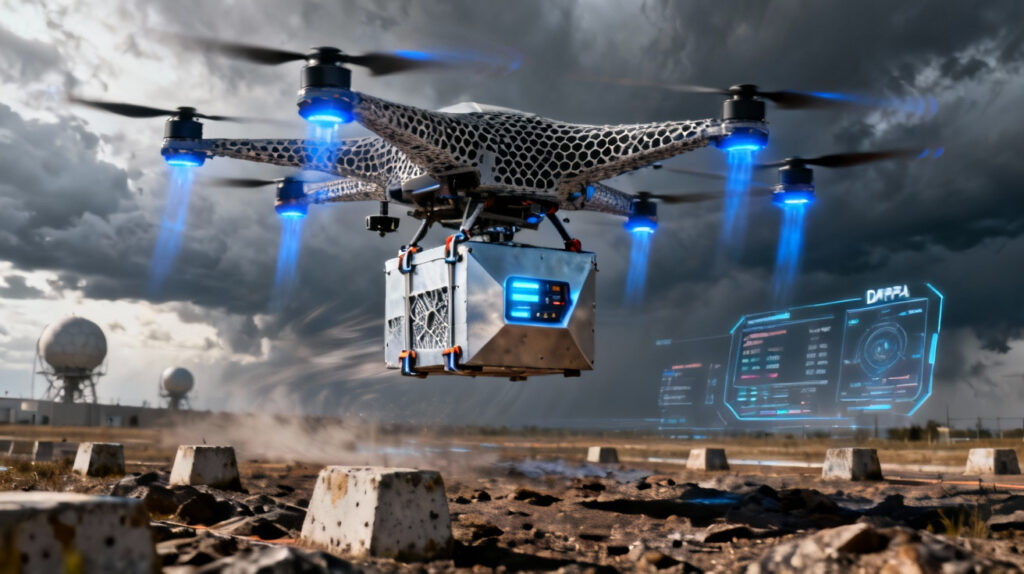

Modern military operations require fast, reliable, and flexible logistics. Recently, the U.S. Army demonstrated a new way to deliver supplies using autonomous technology. This event, held at Project Convergence Capstone 5, shows how the Army is changing its approach to resupply missions. As a result, military forces can now operate more safely and efficiently, even in difficult environments.
The Autonomous Resupply Mission
Scenario Overview
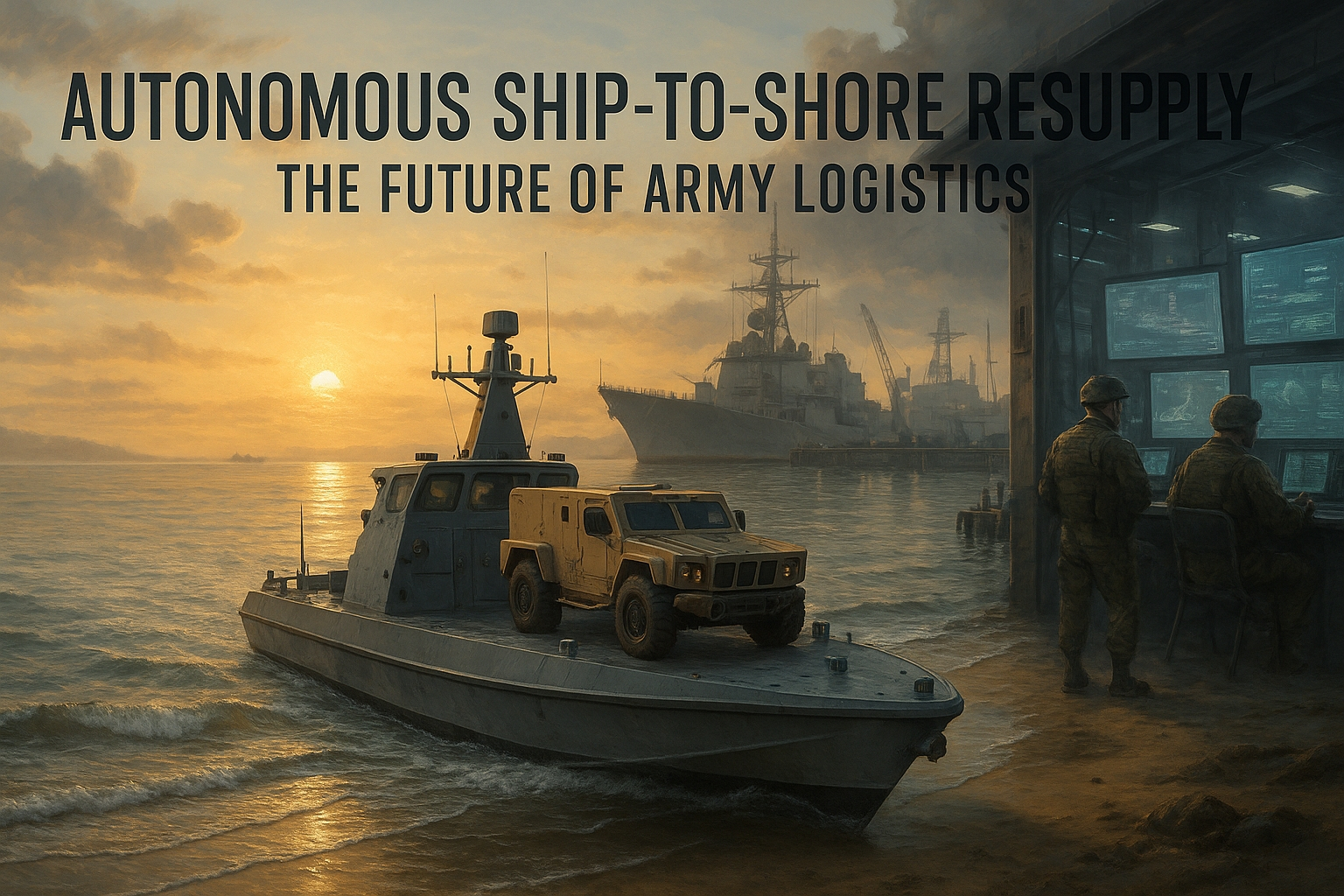
During the demonstration at Pearl Harbor’s Ford Island, the Army set up a simulated resupply mission in a contested port. In this scenario:
- Unmanned Surface Vessels (USVs) were controlled from over 5,000 miles away. These vessels carried a supply-loaded Unmanned Ground Vehicle (UGV).
- When the USVs arrived, control was handed to a local harbormaster, who managed the ramp and UGV unloading.
- The UGV, operated from 3,000 miles away, then delivered supplies to a nearby Humvee. This process showed how remote logistics can work smoothly.
Key Technologies
- Remote and Autonomous Control: The system worked even when GPS was not available, which is important during electronic attacks.
- Human-on-the-Loop Oversight: Soldiers watched over the process and used machine learning to help the system adapt in real time.
- Modular USV Design: The USVs could be quickly fitted with new sensors, making them useful for other tasks like checking for underwater dangers or guarding the harbor.
Strategic Advantages:
Enhanced Survivability
Traditional supply lines are easy targets in dangerous areas. However, the Army’s new approach spreads out supplies and keeps them moving. This reduces the risk to people and turns distance into a strength.
Predictive and Proactive Logistics
Instead of waiting for a need to arise, the Army now uses data to predict what will be needed and sends supplies ahead of time. This “push” strategy means that supplies are already on the way before they are urgently needed. As a result, readiness and safety both improve.
Scalability and Integration
- Single-Operator Control: One Soldier can manage many autonomous vehicles across land, sea, and air.
- Future Integration: The Army plans to connect Unmanned Aerial Systems (UAS) with USVs, making supply transfers even smoother and more flexible.
Soldier Experience and Feedback
Soldiers found the new system easy to use. Many learned to operate it quickly and could teach others after only a short time. The system’s simple design and flexibility made it popular and effective.
The Future of Army Sustainment
The Army’s goal is clear: use autonomous systems, smart data, and real-time information to stay ahead of needs, avoid problems, and move supplies without putting Soldiers at risk. This new way of working aims to deliver:
- Faster Resupply: Supplies reach their destination more quickly.
- Better Readiness: Supplies arrive before they are desperately needed.
- Stronger Resilience: Operations can continue even if technology like GPS is blocked.
Conclusion
The U.S. Army’s recent demonstration of autonomous ship-to-shore resupply marks a big step forward in military logistics. By using autonomous vehicles, smart planning, and real-time data, the Army is setting a new standard for keeping operations running and Soldiers safe in complex situations.
Check out the cool NewsWade YouTube video about this article!
Article derived from: Redefining logistics: Army demonstrates breakthrough in autonomous ship-to-shore resupply. (2025, April 30). www.army.mil. https://www.army.mil/article/285029/redefining_logistics_army_demonstrates_breakthrough_in_autonomous_ship_to_shore_resupply