
The Future of Facial Surgery is Already Here
Imagine needing facial reconstruction after an accident or due to a congenital condition—and instead of using a generic implant, your surgeon designs one perfectly tailored to your unique facial structure. Thanks to advancements in 3D-printed facial implants, this is no longer science fiction—it’s happening now.
A new review by Dr. Joan Birbe Foraster (2025) details the astonishing progress made in the field of facial plastic surgery using custom-made, 3D-printed implants. These innovations offer better outcomes, fewer complications, and a future filled with smart, biologically integrated implants that can even help regenerate tissue.
Why Traditional Methods Fall Short
Historically, surgeons have relied on materials like titanium mesh, PMMA (polymethylmethacrylate), or silicone. These prefabricated implants often required reshaping during surgery and could cause issues like infections, discomfort, or poor fit.
Moreover, autologous bone grafts (using the patient’s own bone) carry the risk of donor site complications and often yield inconsistent aesthetic results.
Enter 3D Printing: Personalized Perfection
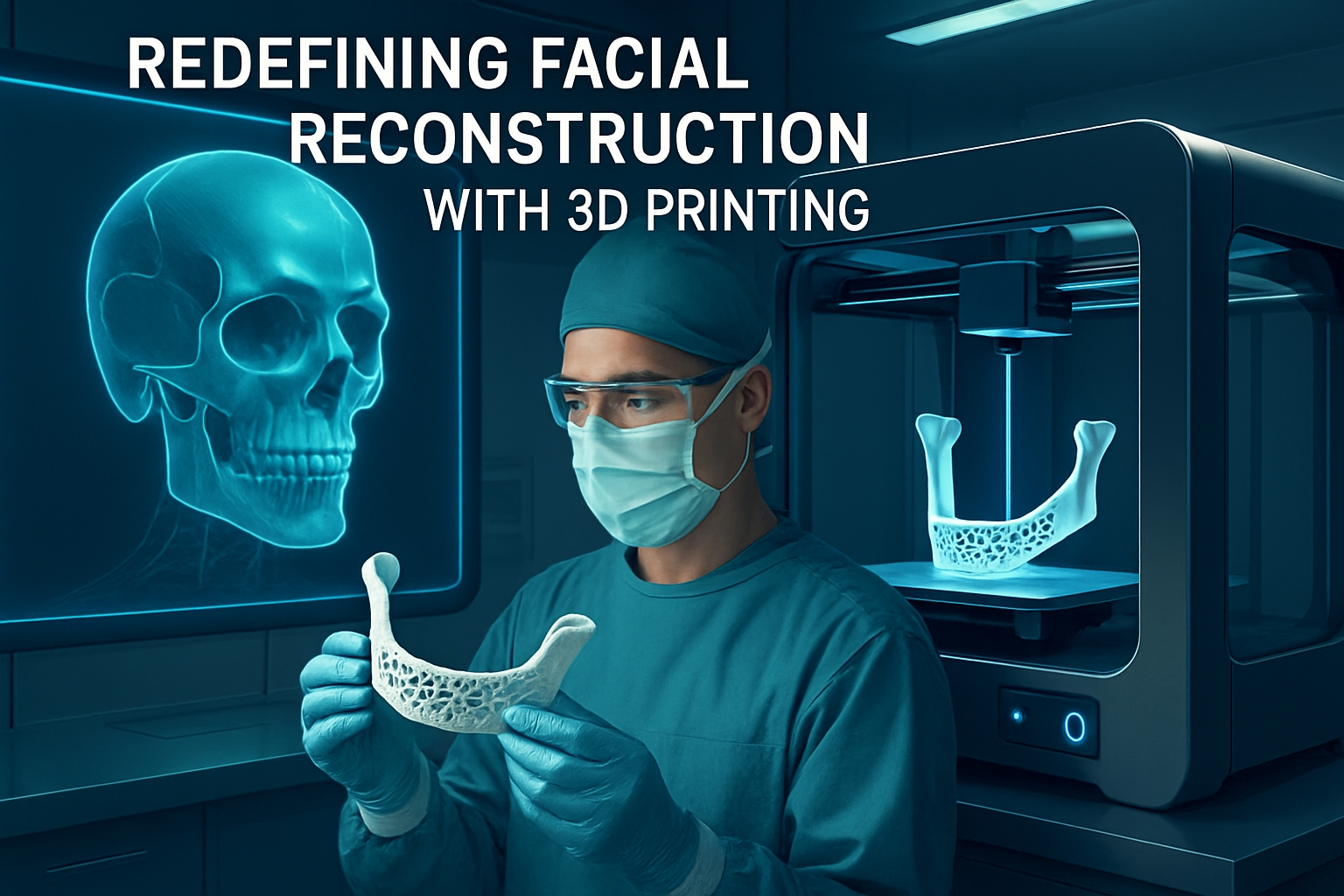
With 3D printing, doctors now use high-resolution CT or MRI scans to create a digital model of a patient’s skull. Using computer-assisted design (CAD) software, a perfectly fitted implant is printed using materials such as:
- Titanium – ultra-strong and great for trauma cases but can cause stress shielding.
- PEEK (Polyetheretherketone) – lightweight, bone-like flexibility, ideal for aesthetic surgery.
- Bioresorbable polymers – dissolvable over time, perfect for children whose faces are still growing.
- Hybrid materials – combine strength and antibacterial or healing properties.
From Operating Room to Artistry
The benefits of 3D-printed facial implants go beyond mechanics—they reduce surgery time, improve aesthetic symmetry, and enhance patient satisfaction. In trauma and cancer reconstruction, they restore both function and confidence. For aesthetic procedures, such as chin or jaw enhancements, the precision is game-changing.
“We’re now able to sculpt faces with millimeter precision, restoring identity, not just appearance,” said Dr. Birbe.
Challenges Holding Back Widespread Adoption
Despite its promise, 3D-printed surgery isn’t without hurdles:
- High upfront costs for software, printers, and skilled staff
- Regulatory red tape delaying clinical implementation
- Limited access in low-resource regions
- Insurance issues for elective or cosmetic cases
What’s Next? Bioprinting and Smart Implants
The next frontier is bioprinting—printing living tissue using hydrogels and stem cells to regenerate bone and skin. These implants may one day grow with the patient or heal on their own.
Smart implants with biosensors could soon monitor healing, detect infections early, and even release antibiotics automatically.
Real Benefits, Right Now
Even with future tech still in development, current 3D-printed facial implants already offer:
- Up to 40% reduced surgical time
- Improved aesthetic outcomes
- Lower revision and infection rates
These implants are more than just structural solutions—they’re redefining the relationship between medicine, engineering, and aesthetics.
Final Thoughts: A New Era of Personalized Reconstruction
3D-printed facial implants are shifting the paradigm in facial plastic surgery. While the road to universal adoption has challenges, the technology is here and growing fast.
As the lines blur between biology and engineering, the idea of customized, regenerating, intelligent implants isn’t just inspiring—it’s inevitable.
Check out the cool NewsWade YouTube video about this article!
Article derived from: Birbe Foraster, J. (2025). Advances in 3D‐Printed Implants for Facial Plastic Surgery. Surgical Technology Development, 14(22). https://doi.org/10.3390/std14030022