
The Future of Military Software: Built to Be Unbreakable
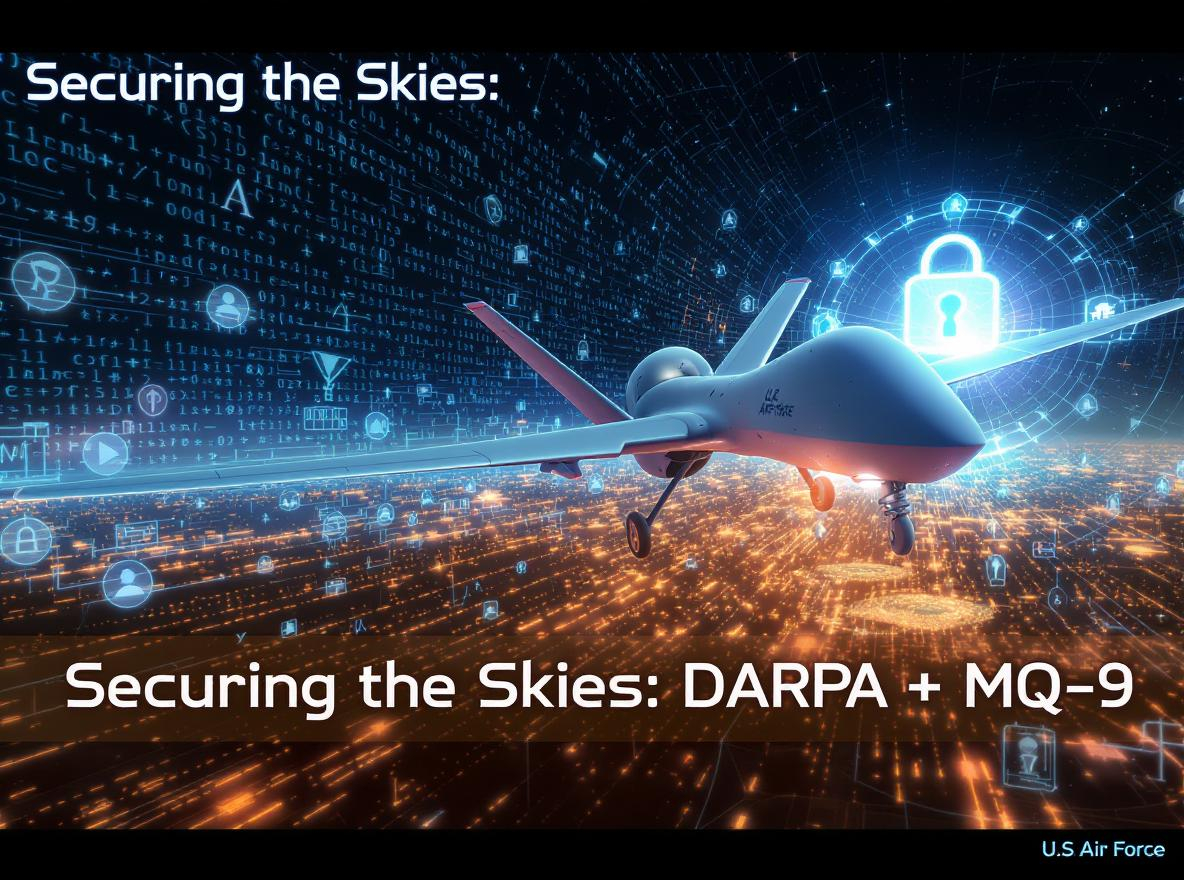
The U.S. military just hit a critical milestone in the battle for cyber resilience. The Air Force has officially partnered with DARPA to embed ultra-secure, mathematically verified software into one of its most iconic drones—the MQ-9 Reaper.
Why does this matter? Because as powerful as our weapons are, the software running them has been a major weak point. Aging infrastructure, outdated security protocols, and reactive patching have made many systems vulnerable to cyberattacks. But DARPA’s new software assurance tools aim to change all that—with math.
What Are “Formal Methods”?
Think of it this way: Instead of writing software and then testing it to see what breaks (which is what we usually do), formal methods use mathematical proofs to ensure it works perfectly from the start.
This means:
- No guesswork.
- No late-stage bugs.
- And no hidden vulnerabilities for hackers to exploit.
It’s like designing a bridge that provably can’t collapse—not just hoping it doesn’t.
Why the MQ-9 Reaper Is the Perfect Testbed
The MQ-9 Reaper is a remotely piloted aircraft used for reconnaissance and precision strikes. It’s reliable, versatile, and widely used—which also means it’s a high-profile cyber target.
The Air Force selected it for this pilot program because:
- It has lower technical and cultural barriers for innovation.
- It’s mature but still flexible enough for software transformation.
- Enhancements here can scale to other systems across the Department of Defense.
Speeding Up Software Upgrades with DARPA’s Tools
Normally, upgrading military software is a slow, cautious process—often taking 12 to 18 months of testing. That delay can hold back crucial innovations.
DARPA’s tools can drastically cut that time. Instead of testing finalized code, they assess behavior dynamically during development—generating artifacts needed for certification like ATOs (Authority to Operate) and even airworthiness documentation.
It’s faster, smarter, and more secure. And it works on legacy code too.
Shattering the “Valley of Death” Myth
In defense tech, the “valley of death” refers to promising innovations dying before they’re adopted. Many believe integrating secure software means years of costly investment. But this new program proves that’s not true.
As Oren Edwards of the Air Force Life Cycle Management Center said, the tools are already working, and the MQ-9 program is “a step-increase in our ability to accelerate robust and resilient weapon system software to the field.”
A Template for the Entire Military
The MQ-9 Capstone project isn’t a one-off. It’s a template—a proof of concept to bring secure, “correct-by-construction” software across the Air Force, Navy, Army, and even NASA.
If successful, it could:
- Revolutionize military software development,
- Slash verification timelines,
- And harden U.S. cyber defenses across the board.
Check out the cool NewsWade YouTube video about this article!
Article derived from: Accelerating cyber resilience: Air Force, DARPA join forces to strengthen cyber defenses | DARPA. (n.d.). https://www.darpa.mil/news/2025/accelerating-cyber-resilience-air-force-darpa-join-forces-strengthen-cyber-defenses