
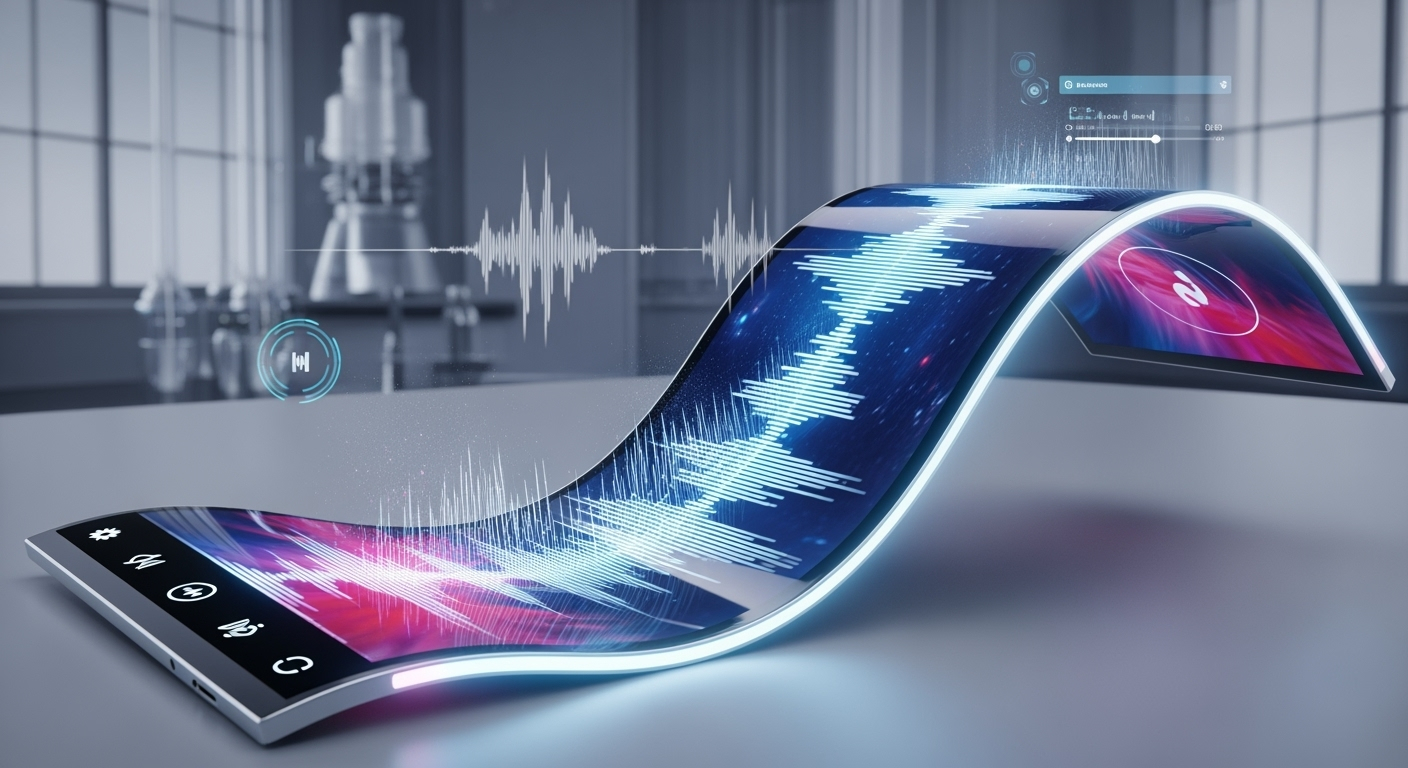
Move Over Foldables — This OLED Display Bends and Sings
In a groundbreaking leap for flexible electronics, researchers have unveiled a bendable OLED display that doubles as a speaker — all without any mechanical hinges or separate sound hardware. Instead, this tech marvel uses PVDF actuators (a type of piezoelectric polymer) to create dynamic shape changes and emit sound by simply applying electrical signals.
That’s right. The screen can flex, curve, and twist on command — and play your favorite music at the same time.
So, What Makes This Technology So Cool?
1. No Wires, No Hinges — Just Pure Flexibility
Traditional foldable displays still rely on mechanical parts, making them bulky, prone to wear, and limited in shape options (mostly U or book-style bends). This new display uses electric fields to bend, eliminating the need for physical hinges altogether.
2. Sound Without Speakers
Forget tiny smartphone speakers. By leveraging PVDF actuators, the display surface itself vibrates like a diaphragm, emitting sound across the full audio spectrum. One signal can simultaneously change the shape of the screen and produce music.
3. One Signal, Two Functions
In a brilliant demonstration, researchers used a single combined signal to control both shape and sound. The display bent forward and backward to a beat while playing Vivaldi’s “Spring” — like a dancing, singing piece of tech art.
4. Complex Multi-Shape Deformation
It’s not just a simple fold. The screen can morph into U-shapes, S-shapes, and more, thanks to bidirectional strain control. That’s a level of display versatility we’ve never seen before.
Why This Matters
This is more than just eye candy. This tech opens the door to:
- Wearable electronics that can respond and adapt to movement.
- Smart devices that provide audio-visual feedback with fewer components.
- Foldable gadgets that are thinner, lighter, and more durable.
- Immersive human-machine interfaces where the screen feels alive — visually and audibly.
By combining strain engineering, PVDF actuators, and flexible OLED tech, this display becomes an all-in-one HMI system — a huge step toward seamless, intuitive interaction with machines.
Looking Ahead
Imagine a smartwatch that curves to your wrist, whispers notifications, and vibrates with emotion. Or an augmented reality headset that changes shape based on your activity while playing ambient audio directly from its lens. That’s the kind of sci-fi made real this research enables.
Flexible displays are no longer just bendable. They’re multisensory, multifunctional, and ready to change how we experience technology.
Check out the cool NewsWade YouTube video about this article!
Article derived from: Park, J.Y., Shin, J.H., Hong, I.P., Nam, S.M., Han, S.H., & Choi, S.S. (2025). Dynamic bendable display with sound integration using asymmetric strain control of actuators with flexible OLED. npj Flexible Electronics, 9(24). Read the article